
Key Takeaways:
- TCM stagnation describes a disruption in the smooth movement of Qi, which may be associated with recurring tightness, heaviness, and difficulty relaxing.
- Prolonged sitting, frequent screen use, emotional stress, limited movement, and poor sleep may allow physical tension to build gradually.
- Common experiences include muscle tightness, reduced flexibility, fatigue, restlessness, and discomfort that repeatedly returns.
- Bojin Glow Wellness Therapy uses controlled, tool-assisted movements, with pressure, pace, sequence, and focus areas adjusted to the client’s comfort.
- Regular movement, suitable workstation habits, adequate rest, and supportive bodywork may help manage the patterns associated with accumulated tension.
Introduction
Recurring tightness, heaviness, fatigue, or discomfort does not always begin with an obvious injury. Your neck may become stiff after long hours at a desk, your shoulders may remain tense during a demanding week, or your body may feel restricted even after resting.
Traditional Chinese Medicine, or TCM, links these patterns with the movement of Qi through the body. TCM stagnation refers to a disruption in that movement, which may be associated with tension and discomfort building gradually. Understanding how daily habits, stress, and recovery affect the body can help make these recurring sensations easier to recognise.
How Qi Supports Movement and Balance in the Body
Qi is commonly understood in TCM as the vital energy that supports movement, warmth, circulation, and normal bodily functions. It is believed to travel through pathways called meridians, which connect different areas of the body.
Qi does not refer to a physical substance that can be seen or measured. It is a traditional concept used to describe how the body functions as an interconnected whole. Smooth movement is associated with comfort and balance. When that flow is restricted, it may be linked with pressure, heaviness, or areas that feel difficult to relax.
TCM also recognises a close connection between physical and emotional wellbeing. Stress can affect breathing, posture, and muscle tension, while ongoing discomfort may interfere with rest and emotional regulation. TCM stagnation may therefore involve several related influences rather than one isolated cause.
Why Qi Stagnation and Physical Tension Build Over Time
Tension often develops through repeated habits. Sitting for long periods keeps the neck, shoulders, hips, and lower back in similar positions. Repetitive work can continue loading the same muscles, while emotional stress may lead to jaw clenching, raised shoulders, or shallow breathing.
The table below shows how common routines may contribute to discomfort:
| Daily pattern | Possible physical response | How it may feel |
Prolonged sitting | Limited movement through the neck, back, and hips | Stiffness after standing or changing position |
Frequent screen use | Forward head posture and raised shoulders | Upper-back and shoulder tightness |
Emotional stress | Sustained muscle tension and shallow breathing | Restlessness or difficulty relaxing |
Limited physical activity | Fewer opportunities for muscles and joints to move | Heaviness or reduced flexibility |
Poor-quality sleep | Less recovery from physical and mental strain | Fatigue and greater sensitivity to discomfort |
These factors can form a cycle. Tiredness may lead to less movement, stiffness may affect sleep, and poor sleep can make stress harder to manage. Over time, the body may have fewer opportunities to release accumulated tension, which may contribute to TCM stagnation.
This pattern can be familiar to people with desk-based jobs and busy routines in Singapore. Long commutes, regular screen use, and limited breaks may keep the body in fixed positions for much of the day.
How Qi Stagnation May Feel in Everyday Life
The signs associated with restricted flow differ between individuals and may affect one or several areas of the body.
Common experiences may include:
- Persistent muscle tension in the neck, shoulders, back, hips, or legs
- Heaviness or pressure in certain areas
- Reduced flexibility after sitting or remaining still
- Fatigue without significant physical exertion
- Difficulty settling after a demanding day
- Irritability or restlessness alongside bodily tension
- Discomfort that improves briefly but repeatedly returns
These experiences do not confirm TCM stagnation, as similar symptoms can have other causes. Persistent pain, numbness, swelling, weakness, sudden symptoms, or discomfort that affects daily activities should be assessed by a qualified healthcare professional. TCM-inspired wellness treatments support comfort and relaxation but do not replace medical care.
How Bojin Bodywork Works on Areas of Accumulated Tension
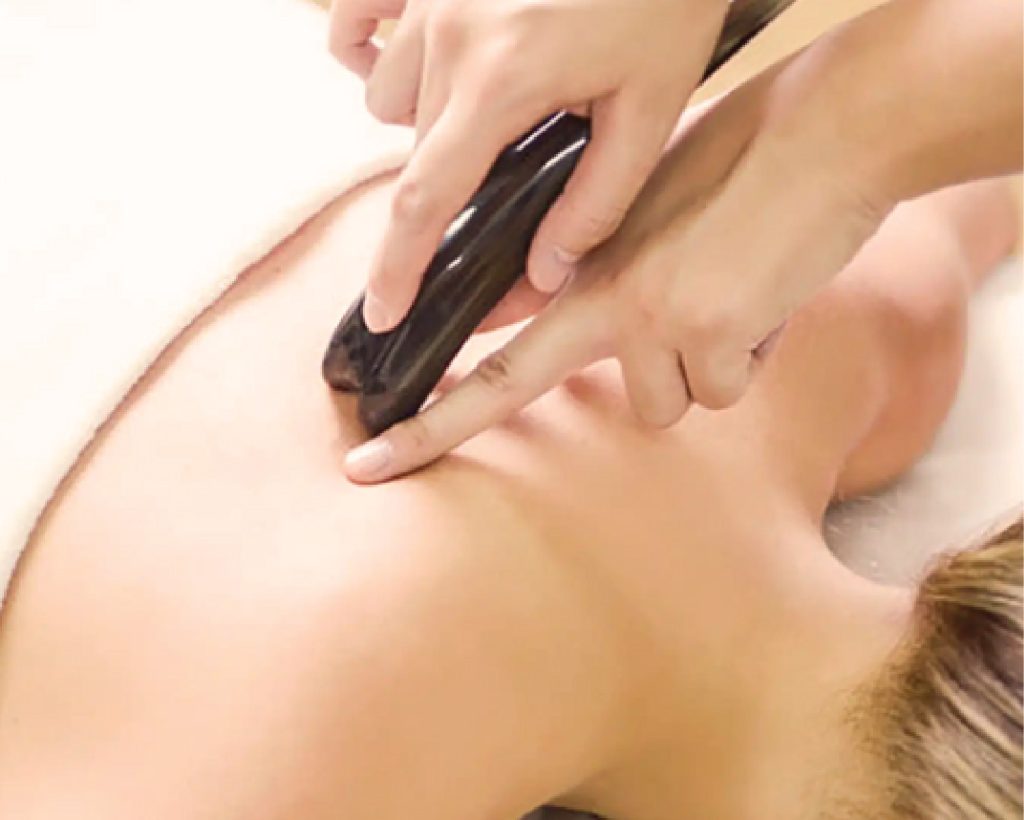
TCM-inspired bodywork uses pressure, repeated strokes, and tool-assisted movements along selected areas associated with meridian pathways. Rather than applying the same pressure across the whole body, the therapist can focus on areas where stiffness or heaviness is most noticeable.
Bojin Glow Wellness Therapy uses a specialised tool to perform controlled gliding and pressing movements. Someone experiencing upper-body tension after prolonged desk work may receive more attention around the neck, shoulders, and upper back. A client who feels heaviness through the lower body may require a different sequence focusing on the hips or legs.
During the bojin massage, the therapist may adjust:
- Pressure intensity
- Speed and direction of movement
- Tool angle
- Order of treatment areas
- Time spent on each area
- Technique used over sensitive areas
These adjustments help the session reflect the client’s tension pattern and comfort level. Controlled pressure and slower pacing may help the body settle, increase awareness of tight areas, and support temporary comfort after a period of accumulated strain. Pressure may be reduced when an area feels sensitive, while slower movements may be used when a gentler approach is preferred.
Bojin massages in Singapore can vary between providers, as each may use different pressure styles, session structures, tools, or treatment sequences. Asking how the session is adapted, who performs it, and what sensations to expect can help you understand whether it suits your needs.
Glow Haven follows a structured treatment while still adapting each session to the individual. The therapist can check areas of tension, confirm your preferred pressure level, observe sensitivity during the session, and adjust the pace or focus areas so the experience remains comfortable.
How Daily Habits Can Reduce the Build-Up of Tension
Bodywork may support relaxation, but daily routines influence how quickly stiffness returns. Regular movement gives the body opportunities to change position before tension becomes persistent.
Helpful habits may include:
- Standing or walking between long periods of sitting
- Performing gentle shoulder, neck, and hip movements
- Adjusting your workstation to reduce sustained strain
- Taking breaks from phones and computer screens
- Using steady breathing to release raised shoulders
- Maintaining regular sleep, meals, and hydration
- Allowing time to unwind after demanding work
These habits may reduce the repeated conditions associated with TCM stagnation. Small changes practised consistently are often more manageable than waiting until discomfort becomes difficult to ignore.
Conclusion
Qi stagnation offers a traditional TCM framework for understanding how posture, stress, restricted movement, and limited recovery may contribute to discomfort over time. Managing these patterns may involve both everyday lifestyle adjustments and supportive bodywork.
As a wellness spa in Singapore, Glow Haven offers Bojin Glow Wellness Therapy with techniques tailored to the areas where each client experiences tension. The therapist adjusts the pressure, pace, sequence, and treatment focus to keep the session aligned with the client’s needs and comfort level.
If recurring tightness, heaviness, or restricted movement is affecting how relaxed your body feels, contact Glow Haven to find out whether bojin massage may complement your current wellness routine.
 Glow Haven